Ways to get a taxi: street, rank, phone, app
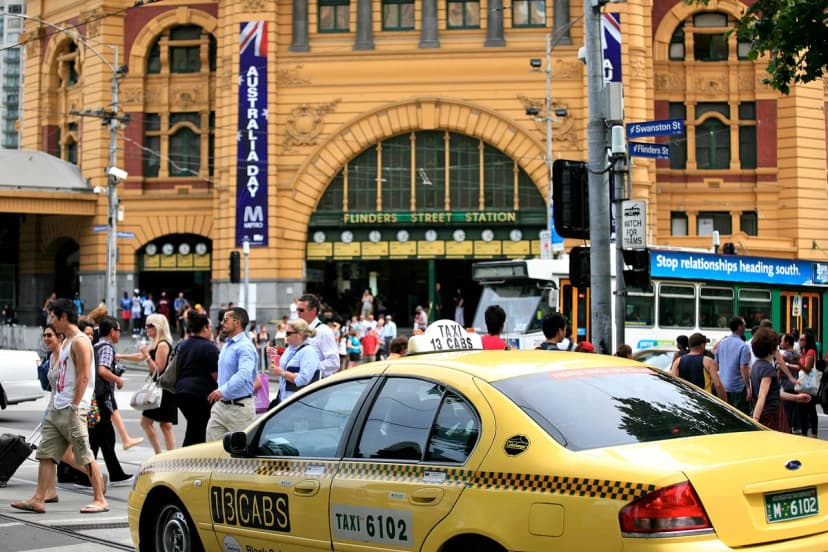
There are a few classic ways to get a taxi: raising your hand on the street, going to a taxi rank, phoning the rank, or using a taxi app. Hailing depends on an empty cab passing by; a rank may not be nearby; phoning means describing your address and uncertain waiting time.
The most practical way is a taxi app: you hail the nearest licensed cab in one tap and see the estimated arrival time and fare before boarding. This guide focuses mainly on calling a taxi via an app, because it's the fastest, most transparent and usually the most affordable method.
What is a taxi app and how does it work?
A taxi app is a system that lets you share your location from your phone and call the nearest licensed cab. The app shows available drivers nearby on a map; when you type your destination it routes the closest car to you and estimates the fare. So there's no rank-hunting or waiting for an empty taxi.
Behind the scenes the app uses location, route and traffic data to estimate both arrival time and price. The driver's name, plate and photo appear on your screen before boarding; you track the ride live and pay in-app. This transparency makes calling a taxi fast, safe and predictable.
Step by step: how to call a taxi with the app
First you open the app and confirm your location; it finds the pickup point automatically, and you can correct the address by hand if needed. Then you type your destination. The app shows the estimated fare and time; you pick a vehicle class (economy, comfort, large) and tap 'Call taxi'.
Once the call is confirmed, the nearest driver is assigned; you see their name, plate, photo and estimated arrival time. You watch their location live until they arrive. When the ride ends you pay in-app; if you don't want cash, you pay by card or app balance. All these steps take a few seconds.
Finding the nearest taxi and estimated arrival time
The biggest advantage of calling a taxi with an app is that the nearest available cab is found automatically. The system ranks nearby drivers by your location and routes the closest one; so you wait less, and because less distance is wasted, the fare is more affordable too.
After the call the app shows the estimated arrival time (ETA) in minutes and updates it as the driver approaches. You watch the car coming toward you live on the map; this removes the 'when will the taxi arrive?' uncertainty. In busy areas the time is short, in quiet areas a bit longer; the app shows this honestly upfront.
Seeing the fare before boarding: the estimate
The most-loved part of calling a taxi is seeing the fare before boarding. The moment you type your destination the app shows the estimated fare; so you know your budget upfront and avoid surprises. Unlike raising your hand on the street and being at the mercy of the meter, you learn the cost in advance.
In an app offering a fixed or agreed price this estimate is exact; traffic on the way doesn't change the fare. You also compare vehicle classes with their prices and pick the most affordable. This transparency is a big advantage on long rides and airport transfers in particular; there's no haggling or 'tourist price'.
Driver, plate and photo: trust before boarding
The foundation of calling a taxi safely is knowing who you're getting in with in advance. In a licensed app, once the call is confirmed the driver's name, the car's plate and the driver's photo appear on your screen. Before getting in you compare the plate and driver and make sure you've boarded the right car.
This information brings peace of mind especially when calling a taxi at night or at a quiet spot. Setting off with an identified, registered driver is far safer than getting into a random car stopped on the street with an unknown driver. When calling a taxi, this transparency is the first step of safety.
Live tracking and sharing your ride
After calling a taxi you can track your ride live on the map; you see which route the car takes and can object to a detour. This both prevents overcharging and keeps where you're going under your control.
In most apps you can share your ride with loved ones in one tap; they see your location live too. Late at night or in an unfamiliar city this feature brings great reassurance. A recorded, shareable and trackable ride makes calling a taxi not just practical but safe.
Payment: cash, card, in-app, foreign card
When calling a taxi you can choose the payment method in advance. Cash works everywhere but brings the change hassle. Card and in-app payment leave a record, prevent disputes and are faster; when the ride ends you just step out without fumbling with a wallet.
Apps that accept foreign cards let tourists pay cashless and see the fare in their own currency. A payment record helps with a fare dispute or an item left in the car. When calling a taxi, card/in-app payment is both practical and safe.
Fixed/agreed price or the meter?
When calling a taxi you may see two pricing options: the meter or a fixed/agreed price. On short city rides the two are close. But on long rides and in heavy traffic the gap widens, because the meter runs a waiting charge even while the car is stopped.
An app working with contracted licensed drivers can offer a fixed price below the meter; this is legal because, while going above the meter is forbidden, giving a discount/agreed price is allowed. On long distances and airport transfers a fixed price is usually more affordable and predictable; you know your budget upfront.

Choosing the vehicle type: economy, comfort, XL/minivan, VIP
When calling a taxi, choosing the vehicle type that fits your need affects both comfort and fare. Travelling alone or with little luggage, the economy class is enough and the cheapest. If you want a more comfortable ride, you can pick the comfort class.
For a large group, heavy luggage or an airport transfer, XL/minivan vehicles make more sense; one car lowers the per-person cost. For those wanting a private chauffeur and top comfort, there's the VIP class. Picking the right class is part of calling an affordable taxi without paying needless fees.
Calling a taxi for the airport and long distances
For airport transfers and long intercity rides, seeing the fixed price in advance when calling a taxi is a big advantage. On long distances the meter's uncertainty can turn into a high total; a fixed-price call clarifies your budget upfront and can include bridge/motorway tolls.
For the airport, a flight-tracked, pre-booked taxi call means the driver is ready the moment you land; no queue, no haggling. On long distances, choosing the right vehicle type (luggage, group) also boosts comfort. So you move smoothly and affordably from airport to hotel or city to city.

Phone/rank vs app: the difference
Phoning the rank or going to the rank still works but has downsides: you have to describe your address verbally, the waiting time is uncertain, you can't see the fare in advance and you can't record the driver's details. At busy times the rank phone may be engaged.
When calling a taxi with an app, you pick your address from the map, the estimated time and fare are known upfront, the driver's name and plate appear on your screen, you track the ride live and pay in-app. In short, the app is ahead of the classic methods on speed, transparency and safety.
Calling a taxi at peak hours and at night
At morning and evening peak hours, on public holidays or late at night, taxi demand rises; finding an empty cab can be harder and the meter runs faster in traffic. In these periods, calling a taxi in advance with the app, or scheduling the call, is a big convenience.
An app offering a fixed price shows the fare before boarding even at high demand; it removes night-tariff uncertainty. When calling a taxi at night, seeing the driver and plate, being able to share the ride and live tracking boost safety at quiet hours. If you can be flexible, waiting a few minutes is sometimes cheaper and faster.
Calling a taxi city by city
The taxi-calling experience differs slightly by city. In Istanbul, bridge and tunnel crossings; in Ankara, the business districts and airport line; in Izmir, the Kordon-Alsancak area shape the ride. In holiday cities (Antalya, Bodrum, Fethiye, Alanya, Kemer, Marmaris) distances grow and demand rises in season.
Whatever city you're in, you call the nearest licensed cab in one tap with the app and see the fare before boarding. From the city links below you can pick your own city and reach its specific taxi-calling, airport and affordable-fare tips. The system works with the same transparency in new cities too.
Taxi app (cab) for tourists and foreigners
In an unfamiliar city, language and price uncertainty make calling a taxi harder. With a four-language app (Turkish, English, Arabic, Russian) you type your address in your own language, see the fare in it and pay with a foreign card. 'Cab', 'taxi' or 'taksi' — it doesn't matter; all mean the same licensed service.
So you call a taxi with no haggling, wrong routes or overcharging; you move smoothly from airport to hotel, from beach to centre. In tourist spots like Antalya, Alanya, Bodrum, Marmaris and Fethiye this is very valuable; with no cash-exchange hassle, you ride knowing the price and the driver.
Licensed taxi calling vs touts
On the street or at the airport, touts who approach asking 'taxi?' can look cheap; but they're unlicensed and often uninsured. In a crash or dispute you're unprotected, the price is unclear and more may be demanded at the end. Foreign passengers especially get caught out here.
Calling a taxi from the app removes this risk, because the car you call is licensed, its driver's identity and plate are known, and the price is known upfront. A 'cheap'-looking tout taxi often costs more. The real affordable taxi is the licensed, fixed-price one you call from the app; it's both safer and usually more economical.
Cancelling, waiting and changing the ride
Sometimes plans change. If you change your mind after calling a taxi, most apps allow a free cancellation within a certain window; there may be a small fee for cancellations long after the driver set off. The app shows the cancellation rules clearly upfront.
When the driver arrives a reasonable waiting time is granted; if it's exceeded, a waiting charge may apply. If you need to change your destination during the ride, most apps let you update it and see the new estimated fare. This flexibility fits calling a taxi to real life.
7 common mistakes when calling a taxi
1) Not checking the fare before boarding. 2) Not comparing the driver's name and plate before getting in. 3) Getting into a 'cheap'-looking tout taxi on the street. 4) Not following the route and not objecting to a detour.
5) Not accounting for the peak-hour and night tariff. 6) Calling a needlessly large/VIP vehicle even for a short distance. 7) Not using card/recorded payment instead of cash. Avoid these seven and almost every taxi-calling experience becomes faster, safer and more affordable.
Summary: golden rules for easy, affordable taxi calling
Call the nearest licensed cab from the app. See the fare before boarding and prefer a fixed/agreed price on long distances. Compare the driver's name and plate before getting in. Track the ride live and share it with loved ones. Pay by card/in-app so there's a record. Get into a licensed taxi, not a tout. Pick the right vehicle type.
Apply these rules and calling a taxi is always easy, safe and affordable. Online taxi calling means a smarter, more transparent method — not lower quality.