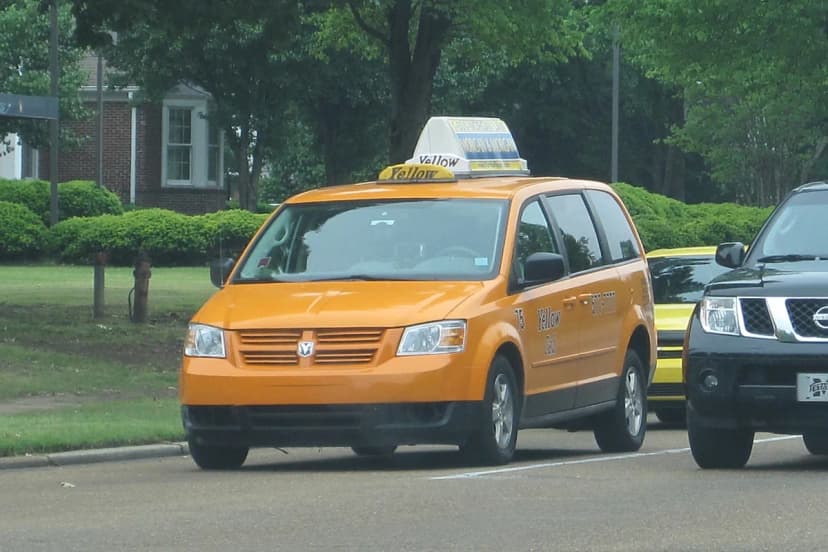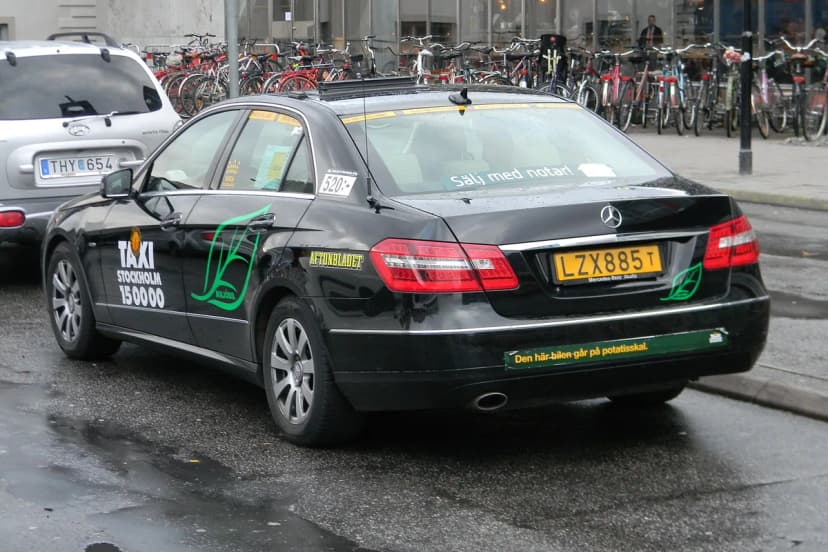
Taxi or own car? What's the right question?
Many people answer 'should I buy a car?' by looking only at the purchase price. But the right question is: 'How much do I really drive in the city, and what's the total cost of that?' Car ownership carries hidden and ongoing costs far beyond the purchase price; a taxi, on the other hand, means paying only for the rides you take.
This guide doesn't tell you to 'always use a taxi'; it offers you a real calculation. For some, car ownership makes sense; for others, a taxi (with occasional car rental) is far more economical and stress-free. The goal is to make your decision based on real cost and usage frequency, not emotion.
The true cost of car ownership
A car's cost isn't just its sticker price. Added on top: depreciation (loss of value), compulsory and comprehensive insurance, motor vehicle tax, periodic maintenance and tyres, fuel, parking and garage fees, inspection, possible repairs and fines. Most of these are fixed expenses that continue even if you don't use the car.
Though each item seems small individually, added up over the year they reach a serious sum. Moreover, a significant part of these costs runs even while the car sits in the garage. To see the true cost, you must account not for the purchase price but for the 'total annual burden of keeping the car'.
The cost of a taxi: pay only for what you use
The taxi's biggest financial advantage is that the cost is entirely usage-based. On days you don't ride, you pay nothing; fixed expenses like insurance, tax, parking and maintenance are the driver's and fleet's responsibility, not yours. You pay only for the distance you travel.
This makes a big difference especially for someone who uses a car several times a day but for short distances in the city. With a fixed/agreed price you know the ride's cost upfront and keep your budget predictable. The 'pay as you use' model removes the burden of keeping an idle asset.

The parking problem and city stress
One of the most tiring aspects of owning a car in a big city is parking. Hunting for a spot at home, at work or everywhere you go means lost time, stress and often an extra fee. In busy areas, garage fees and parking fines are an invisible but regular cost of the car.
With a taxi this problem disappears entirely: it drops you at the door, and parking is the driver's concern. When going to a meeting, event or shopping, you don't worry about 'where will I park?'. A significant part of city stress comes from parking; the taxi lifts this burden off you completely.
Fuel, maintenance, insurance, inspection: taxi vs car
With an owned car, items like fuel, periodic maintenance, tyre changes, insurance renewal and inspection regularly come out of your pocket and require your time. A breakdown or unexpected repair can suddenly shake your budget. These burdens are both financial and mental.
When you use a taxi, you deal with none of these; maintenance, insurance and keeping the car running are the fleet's job. You just get in, go and get out. This frees both your wallet and your mind from this constant operational burden; transport stops being a 'task' to manage.
Depreciation and loss of value
The car you buy loses value as you use it and as time passes; this loss is often the biggest but least-noticed cost item. The amount you'll get back when you sell is noticeably below what you paid; the difference is money that 'melted away' over the time you owned it.
When you use a taxi you have no depreciation risk, because you don't own an asset — you buy a service. The car aging, its model losing value or its technology falling behind doesn't concern you. Depreciation is an invisible cost that must be factored in when considering car ownership.
How often do you really need a car in the city?
The key to deciding is honestly measuring your real usage frequency. Many city dwellers use their car only for a short time per day; the rest of the hours the car sits parked, continuing to generate cost. If you use a car only a few times a week and for short distances, ownership may not be economical.
Observing your usage for a week or two is enlightening: how many rides, what distance, which hours? With this data you clearly see whether a taxi (with rental when needed) is cheaper than ownership. For low and irregular use, 'pay as you go' is almost always more sensible.
Car rental or taxi?
Car rental is a good option for occasional car needs; but it's not practical for short city rides: pickup-dropoff, deposit, insurance, return with fuel and, again, the parking hassle. Rental makes more sense for daily/weekly and out-of-town use.
On short, frequent and in-city rides, a taxi is almost always more practical; no contract, deposit or parking hassle. The smart strategy is often to combine the two: a taxi for daily city transport, car rental for a long weekend getaway or out-of-town trip. So you use the most suitable and economical solution for each need.

Drinking, fatigue and focus: the taxi is the safe choice
In some situations a taxi isn't just economical but the most responsible choice. If you've had alcohol, are very tired or your focus is scattered, getting behind the wheel is both a legal and a vital risk. In these cases the taxi is the right decision that protects you and others.
Even if you have your own car, leaving it and returning by taxi in these conditions is wise. After a night out, a celebration or a long workday, reaching home safely without thinking about the car is priceless. The taxi is always a ready solution for the moments 'when you shouldn't drive'.
No parking fines, traffic stress or garage fees
A car owner constantly faces small but tiring costs: parking fines, closed roads, garage fees, time lost in traffic and hunting for a spot. Though each seems small, over the year they erode both your money and your morale.
With a taxi you deal with none of these: no fines, no garage fees, no parking-hunt lap. Even in traffic, instead of driving you can look at your phone, rest or work. The invisible 'friction costs' of city transport are largely eliminated with a taxi.
Taxi for daily city transport
For daily city transport, a taxi is both practical and comfortable, especially on short-to-medium distances. You call the nearest vehicle from the app, see the price before boarding and go door-to-door. Instead of driving, parking and thinking about the car, you rest or get your work done along the way.
When public transport falls short at certain hours, or when you want a comfortable, direct ride, the taxi steps in. For regular users, a fixed/agreed price keeps the budget predictable. It's possible to move daily transport to a flexible, pay-as-you-use model without tying it to the burden of car ownership.
Airport and travel: leave the car at home
Driving to the airport in your own car is often more costly than thought: days of garage fees, the worry of leaving the car there, and a tired drive back. Making the airport transfer by taxi removes both these costs and the stress.
With a flight-tracked, fixed-price taxi you go to the airport without leaving your car in a garage for days; on return, a car meets you and you reach home comfortably. While you travel, your car stays safely at home. The taxi makes travel transport simple, predictable and hassle-free.

Tourists: a taxi instead of renting a car
Renting a car in an unfamiliar city is often a source of stress for tourists: unfamiliar traffic rules, different signs, the parking problem, insurance and deposit hassle, the worry of turning the wrong way. All of this can spoil the holiday's enjoyment.
With a four-language taxi app (Turkish, English, Arabic, Russian) you go where you want without having to drive: type your address in your own language, see the price, pay with a foreign card. From airport to hotel, to the sights and back; with no driving stress. For most tourists a taxi is both more comfortable and safer than renting a car.
Corporate: a taxi instead of a fleet
For companies, owning or leasing a vehicle fleet means serious cost and operational burden: purchase/lease, insurance, maintenance, fuel, parking and management. Vehicles used little and irregularly leave the fleet inefficient.
A corporate taxi removes this burden: employees ride on demand, only as much as they use; invoicing is central and spending reportable. Instead of fleet management, idle vehicles and fixed expenses, you set up a flexible, scalable and transparent transport solution. For many companies this is smarter in both cost and management.
Environment: fewer cars, a cleaner city
Individual car ownership is one of the main sources of traffic, parking pressure and emissions in cities. Fewer people owning little-used cars means less traffic, more green space and cleaner air. Shared, pay-as-you-use transport allows resources to be used more efficiently.
Choosing a taxi (especially as electric/eco vehicles spread) reduces personal car dependence and contributes to a more sustainable city. Instead of a car spending most of the day parked, an actively used fleet is smarter in terms of resources. Your transport decision can also be an environmental choice.
The hybrid approach: less car, more taxi
The smartest strategy is often not 'all or nothing'. For many people the ideal model is: daily city transport by taxi, car rental for the occasional long/out-of-town need, and getting rid of the second (little-used) car entirely.
This hybrid approach keeps flexibility without carrying ownership's fixed burdens: a taxi for daily comfort, rental for special occasions. When you set this balance by looking at your own usage data, you both save significantly and free yourself from parking, maintenance and depreciation hassle. Smart transport rests not on a single car, but on choosing the right vehicle for the need.
Taxi or own car? 8 tips for deciding
1) Look at the total annual ownership cost, not the purchase price. 2) Measure your real usage frequency over a week or two. 3) Account for parking, garage and fine costs. 4) Don't forget depreciation (loss of value).
5) On low/irregular use, evaluate the taxi + rental combination. 6) Make the taxi the default in situations like drinking/fatigue. 7) Consider leaving the car at home for airport and travel. 8) Seriously calculate getting rid of a little-used second car. These eight tips let you base your decision on real data.
7 myths about taxi vs own car
1) 'Owning a car is always cheaper' — false; on low use, fixed expenses make ownership expensive. 2) 'A taxi is only for occasional use' — false; it can be economical for regular city transport too. 3) 'A car's cost is its purchase price' — false; depreciation, insurance, parking and maintenance form the real burden.
4) 'Car rental replaces the taxi' — false; on short city rides a taxi is more practical, rental suits long/out-of-town. 5) 'My own car is always more comfortable' — false; parking and traffic stress take that comfort away. 6) 'A taxi budget is unpredictable' — false; with a fixed price it's known upfront. 7) 'You can't live in the city without a car' — false; with taxi + rental + public transport many people live car-free and comfortably. Knowing these myths helps you decide more clearly.
Summary: the smartest city transport decision
Base the decision on real usage and total cost, not the purchase price. Account for hidden burdens like parking, fuel, insurance, maintenance, depreciation and fines. On low/irregular use, a taxi (with rental when needed) is often more economical and stress-free. Make the taxi the default for drinking/fatigue and travel. Consider getting rid of a little-used car.
When you do this calculation honestly, you'll see that for many city dwellers the smartest transport is the 'pay as you use' model. The answer to 'taxi or own car?' varies by person; but the right question is always the same: how much do I really use, and what's the true cost?