Can You Pay a Taxi in Turkey with a Foreign Card?
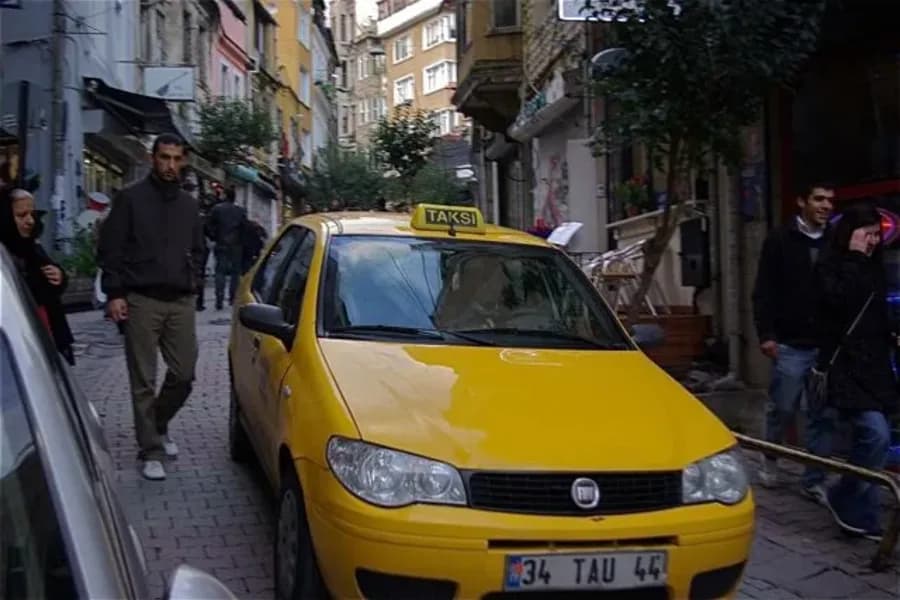
Short answer: yes in most cases, but conditions vary. A significant share of licensed taxis in Istanbul, Ankara, Antalya, and Izmir carry in-vehicle POS terminals. These typically accept Visa and Mastercard; American Express acceptance is much more limited. That said, not every taxi is guaranteed to have a card reader — older vehicles or taxis in smaller districts may only accept cash.
When you book through a licensed platform like TaksiBul, you see available payment options before you board: will the car have a card reader, or would you prefer in-app payment? That transparency eliminates the unpleasant surprise of a driver saying 'card not working' after the trip ends.
Visa and Mastercard: Which Cards Work?
The vast majority of taxi POS terminals in Turkey are compatible with international Visa and Mastercard networks. Your card must have 'international transactions' enabled — some banks block overseas charges by default, so it is worth checking your banking app or calling your bank before you travel.
Chip + PIN (EMV) works most reliably. Contactless (NFC) is increasingly well supported: Turkey's POS infrastructure has largely adopted the EMV contactless standard. Whether Apple Pay or Google Pay will work depends on the specific terminal; for platform-based payments, in-app payment is a more reliable alternative.
Contactless Payments and NFC in Turkish Taxis
Some Istanbul taxis carry bank-partnered or integrated contactless POS devices. Tapping your card or phone is enough for smaller amounts. The contactless limit is typically around 500 TL; higher amounts require PIN entry.
When using contactless, watch out for the DCC screen: if the terminal asks 'would you like to pay in your home currency?' the answer should always be 'NO'. Confirm the charge in Turkish lira. We explain exactly why DCC is disadvantageous in the section below.
Cash Turkish Lira: Practical Tips
Because card acceptance is not guaranteed, it always makes sense to carry some Turkish lira. For short city rides 200-300 TL is a comfortable buffer; for medium distances 500 TL covers most scenarios. Avoid large notes (500 TL, 1000 TL): the driver may not have change, which creates unnecessary friction at the end of the trip.
Use ATMs inside airports or shopping centres — these belong to established institutions and tend to have higher withdrawal limits. Choose bank-branded ATMs over small standalone exchange-adjacent machines, which sometimes apply higher transaction fees.
Currency Exchange: Where and How
Currency exchange bureaus ('doviz' or 'kambiyo') are concentrated around airports, tourist districts, and major high streets. Competition is high, so comparing two or three quotes is worthwhile. Bank exchange rates serve as a general reference; exchange bureaus often trade closer to the mid-rate.
The first exchange kiosk inside the airport rarely offers the best rate. Waiting until you reach the city centre and comparing local bureaus can be more advantageous. Hotel exchange is typically the least competitive option. If you carry dollars or euros you can always exchange them in major cities; avoid places that do not issue a receipt.
The DCC Trap: Why You Should Always Say No
Dynamic Currency Conversion (DCC) is when the POS terminal offers to process the charge in your home currency. A 450 TL ride might appear as '24 EUR — would you like to pay in euros?' Accepting this is generally disadvantageous: the conversion rate is set by the POS provider, not your card network, and the difference can run to several percentage points.
The right move is always to decline and confirm the charge in Turkish lira. The conversion then happens through your bank or card network, which typically uses a more competitive rate. DCC is legal but commercially unfavourable to the cardholder; simply being aware of it is enough to avoid it.
Taxi Meter vs Fixed Price: What Do You Actually Pay?
City taxis in Turkey run on a municipal meter. The standard TaksiBul tariff is a 180 TL flag-fall plus 35 TL per kilometre. The meter is sealed and audited by the municipality; the driver cannot alter it. Before the ride ends, the TaksiBul app shows an estimated distance and cost so there are no surprises.
For airport transfers and intercity journeys, a fixed price agreed before boarding replaces the meter. The fare shown at booking is exactly what you pay at the end, regardless of traffic or waiting time. For tourists this model is far more predictable than a metered ride in an unfamiliar city.
In-App Payment: Secure and Cardless
Save your card once in the TaksiBul app and you never need to enter it again. Payment processes automatically when the ride completes — no physical POS, no card details shared with the driver. In-app payment removes the card-acceptance variable entirely.
A digital receipt is generated automatically in your app history and sent to your registered email. For business travellers or anyone tracking expenses, this record is ready the moment the ride ends. The app runs in four languages, so the payment screen is always in a language you understand.

Airport Payment: Istanbul, Antalya, Izmir
At Istanbul Airport and Sabiha Gokcen, official taxi stands are positioned at the terminal exits. Vehicles at these stands are licensed and operate on meters or fixed airport tariffs. Card acceptance varies by driver; booking through TaksiBul in advance locks in your preferred payment method.
Antalya Airport sees high tourist volume, and most licensed taxis there accept foreign cards. For late-night arrivals especially, a pre-booked fixed-price transfer via TaksiBul provides both a price guarantee and payment certainty. The same applies at Izmir Adnan Menderes.
Receipts and Invoices: Your Rights
Turkish law requires taxi drivers to issue a meter receipt at the end of every journey. The receipt printed by the taximeter is the official record of the transaction. Asking for a receipt is your legal right; the driver cannot decline.
With TaksiBul, a digital receipt is generated automatically and needs no paper handling. For corporate travel or expense reporting, this digital record serves as a valid document. If you need a paper receipt, let the driver know before the journey ends.
Tipping Culture in Turkish Taxis
Tipping taxi drivers in Turkey is not obligatory; there is no strict norm. The common practice is to round up the meter amount to the nearest convenient figure and leave the change. For a 127 TL ride, paying 140-150 TL or leaving the remainder is a typical gesture.
For airport meet-and-greet service, luggage assistance, or a long journey, a slightly larger tip is appreciated but entirely at your discretion. In-app payment screens may include a tip field with preset amounts; selecting zero is perfectly normal and will not cause any awkwardness.
Quick Answers to Common Tourist Payment Questions
Can I pay in euros or dollars? Rarely and not officially; a few drivers in heavily touristic areas may accept foreign currency but the exchange rate is usually unfavourable. Turkish lira is always clearer.
Can I pay with cryptocurrency? No — this is not a standard practice for street taxis. TaksiBul offers cash, card, and in-app payment.